


 awxboss
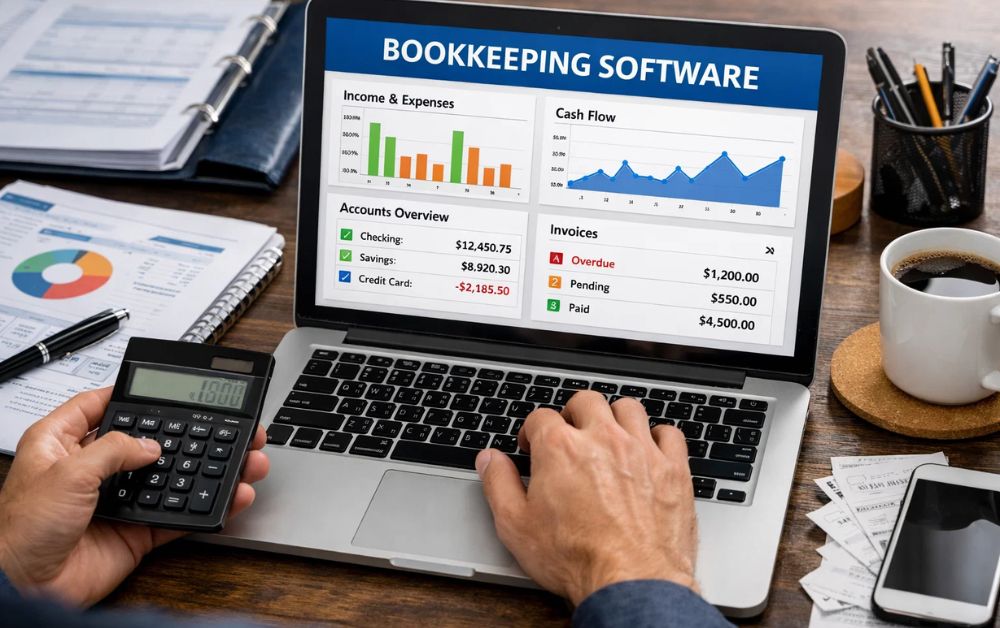
The choice of the appropriate Bookkeeping Software in UAE is a critical choice in the dynamic business environment of the United Arab Emirates, which is concerned with the proper balance of financial records, effective taxation, and efficient operations. Multi-currency transactions, multi-lingual requirements, growing automation requirements, VAT requirements, and the need to meet business needs in a unique manner make the software you select have to be flexible to meet your special needs. This blog provides the most essential aspects that should be considered, and also presents Loditech Technologies LLC as one of the reliable partners that you can trust.
1. Local regulatory compliance & VAT readiness
You should make sure that your bookkeeping software helps you with the specific regulations when you are working in the UAE, i.e., the VAT law, and the e-invoicing, which is required by the Federal Tax Authority (FTA). Seek software that offers:
- Inbuilt VAT calculation, reporting, and filing (including electronic filing format).
- English and Arabic invoice printing and interface.
- Multi-currency and adherence to the changing tax policies in the UAE.
By making sure that your software is aligned with the UAE tax law and financial practices, you prevent mistakes, fines, and lost opportunities.
2. Scalability & business‑size adaptability
You can begin small with your business, but the aim is to grow. Your bookkeeping software should be able to grow. Key questions to ask:
- Is it able to deal with numerous companies or branches on a single consolidated database?
- Can it be configured to work in single-user and multi-user systems without failure?
- Is it intertwined with inventory, payroll, banking, or manufacturing modules in case your business grows?
Consider your growth path when making a decision: something that works now but cannot keep up with your growth might be a cost liability in the future.
3. Integration & automation features
Contemporary bookkeeping is not only about typing the numbers, but it is also about automating the processes, integrating the systems, and lessening manual labor. Take into account that the software:
- Connects to your banks to have an automated feed or reconciliation.
- Relates to your CRM, ERP, inventory, or e-commerce systems.
- Provides mobile or cloud accessibility, and thus allows customers to work from anywhere.
- Makes available features such as payroll, fixed assets, multi-location stock, or project tracking where necessary.
Selecting a platform that can easily be integrated assists you in streamlining the operations as opposed to isolating all functions.
4. Usability & training/support
Having a strong system does not matter when your group is complicated. Evaluate:
- Does it have an intuitive user interface for your team? Is it usable even by non-accounting employees?
- Is onsite or remote training, onboarding, and continuing training and support offered by the vendor or partner?
- Does it have local support resources in the UAE (time zone, language, context), and not just offshore support?
- What is the user-community/peer network regarding troubleshooting, forum access, or documentation?
Usability is positive and minimizes mistakes, enhances adoption, and returns your investment in value sooner.
5. Customization & industry‑specific functionality
There are a large number of software solutions that offer generic bookkeeping features; however, industries tend to be unique – construction, real estate, retail, manufacturing, and service-based businesses are all different. Checking software:
- Does it permit industry-specific custom fields, industry-specific reports, and templates?
- Do you have any specialized modules (e.g., real-estate sales/purchase SPA tracking, retail POS, manufacturing job-work) that you need?
- Is the partner capable of providing customization at an affordable price (as opposed to you having to modify your processes to the software)?
- Do regulations or business models change in the future?
Customization has the advantage of the software to match you rather than the other way around.
6. Cost, licensing, and total cost of ownership (TCO)
The cost is always the issue–but you must go beyond the initial cost of the license.
- How much are the first licence charges (single-user or multi-user), and annual support/ subscription costs?
- Training, data migration, customization, upgrades, support costs?
- Do you have any hosting/access charges, if you have cloud/remote access?
- How expensive is a change in the future in case you change modules or add users/branches?
A cheaper initial solution may have greater unseen expenses in the long-term plan, 3-5 years.
7. Data security, backup & audit‑trail
Your bookkeeping information is confidential -financial transactions, payroll, tax returns, supplier/customer information. Security cannot be compromised.
- Is there a clear audit trail (who did what, when) of the software by internal control and external audit?
- Is there automatic protection (cloud or local) of backups?
- Does it use role/permissions to control access by users?
- Is the vendor/partner practicing the best practices of data protection (this is of great importance in cases of accessing cloud or accessing multiple locations)?
- In the case of the UAE, data residency or local regulation issues need to be considered.
Data loss or breach of data security can ruin trust and cause compliance problems or millions in damage as a result of a breach.
8. Reporting & decision‑making capabilities
The bookkeeping software is not only compliance-related at the end of the day, but it must facilitate decision-making and strategic development. Assess the ability to offer:
- Dashboards, KPIs, financial real-time view of finances, cash flow, receivables/payables.
- Tailored business-specific reports by industry, size, and region.
- Forecasting or budgeting capabilities (or data exporting capabilities).
- Multi-entity consolidation occurs in the case of more than one company or business unit.
When your bookkeeping software is as much of a tool to be used as a record-keeping service, it is worth more.
9. Vendor/partner credibility & local presence
The success of a relationship is heavily reliant on the implementation partner, even with a great software product. In the case of business in the UAE, it is prudent to deal with local partners that are trusted and familiar with the market. For example:
- Find partners that have certifications, customer reviews, experience in the industry, and can support them locally (time, language, cultural knowledge).
- Take into consideration the capability of the partner to deal with customization, integrations, training, and continuous support within the context of the UAE.
- A good partner will make sure your bookkeeping software implementation process is a hassle-free affair and that you do not fall into the pitfalls.
10. Future‑proofing & upgrade path
Lastly, do not expect the software and partner that you select to remain stagnant; it must keep up with the changes in business and regulations.
- Does the vendor update it on a regular basis, requesting a change in tax rules or technology?
- Easy scale of users, modules, locations, and integrations?
- Is the software architecture modern (cloud-capable, mobile-friendly)?
- Does the partner invest in your long-term success, rather than the first sale?
Making a decision today will save you the cost, inconvenience, and danger of making a change in the future.
Conclusion
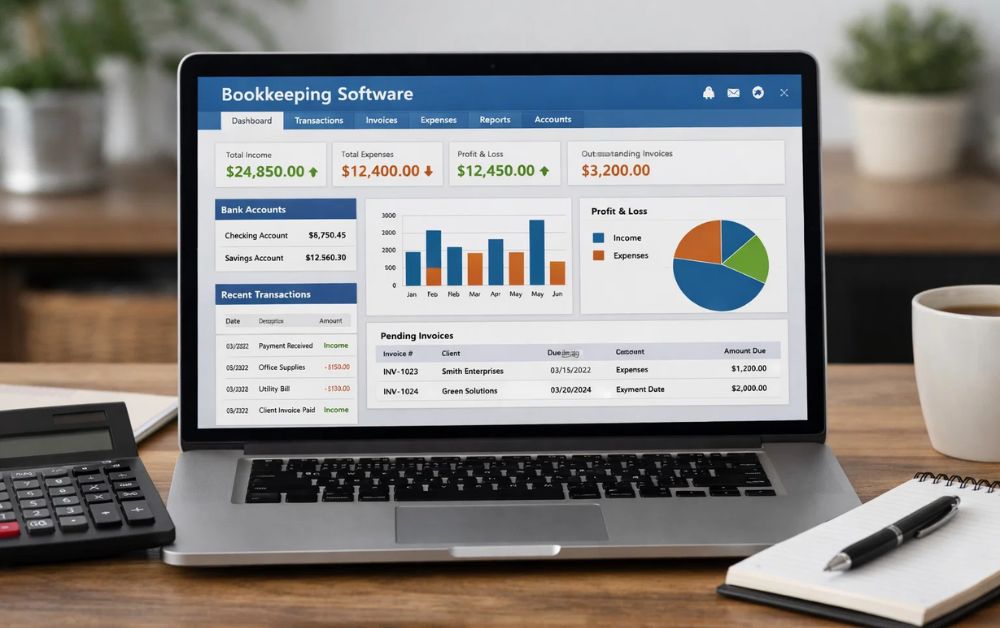
The choice of Bookkeeping Software in the UAE is not just about the tool one picks, but rather a tool that is a strategic platform of financial transparency, regulation, business efficiency, and business development. By addressing compliance, scalability, integration, usability, customization, cost, security, reporting, credibility, and future-proofing as your key concerns, you prepare your business to succeed.
And when it comes to a reliable local partner, you can consider Loditech Technologies LLC as a trusted option, offering deep experience in UAE implementations and Tally‑based solutions.
Make your choice thoughtfully—and you’ll ensure your bookkeeping software is a driver of growth, not a burden.

