


 awxboss
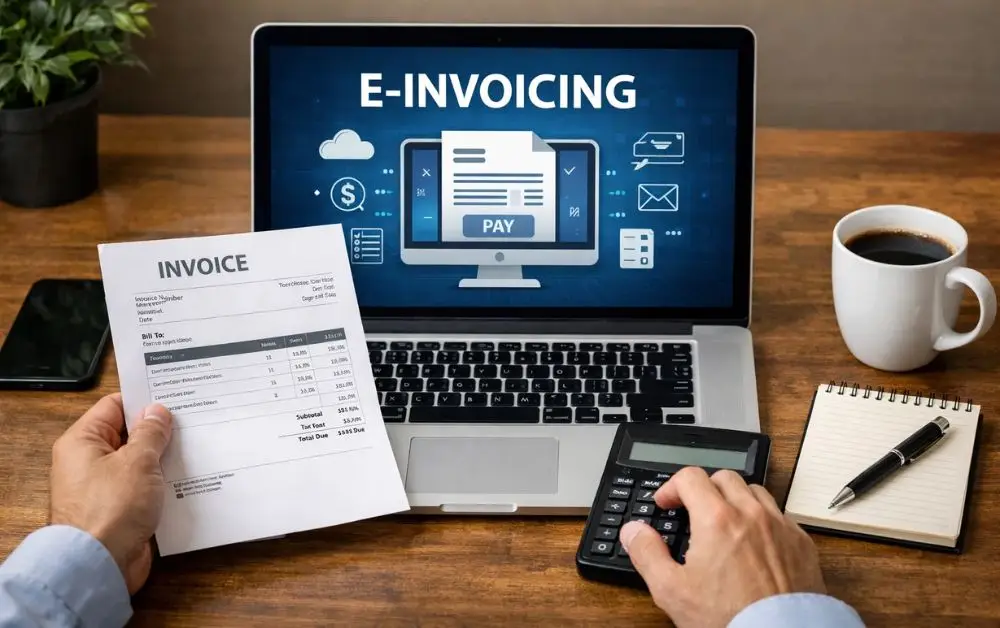
E-invoicing in the UAE has grown from a tech-advanced concept in recent years to a regulatory necessity that no firm should overlook. Guided by the Ministry of Finance (MoF) and implemented with adjustments to the Federal Tax Authority (FTA) model, the e-invoicing regulations of the UAE are expected to transform the financial reporting system, enhance transparency, and guarantee effective compliance with VAT throughout the economy. This guide will provide a business with a general overview of the legal framework, major requirements, implementation schedule, benefits, and best practices to remain within the bounds of the new system.

What Is e-Invoicing and Why It Matters
E-invoicing describes the production, transmission, reception, and storage of invoices in a formal digital form that is capable of being processed by government systems automatically. Considering the new regulations under the UAE, even traditional paper invoices and unstructured PDFs are no longer adequate to pursue tax reporting and VAT compliance, as soon as e-invoicing is introduced to your type of business.
Fundamentally, the system is concerned with real-time digital reporting and lessening manual data entry, limiting the number of mistakes, and allowing the FTA to check transactions in real time. The change also aligns the UAE with the global tax and digital trade environment, assuring the UAE of a competitive environment in a digitalized world.
Legal Framework and Regulatory Backdrop
The UAE e-invoicing regulations were based on the amendments to the major taxation regulations:
- The UAE VAT law was amended by federal Decree-Law No. 16 of 2024 to introduce e-invoicing formally and establish the electronic invoices and credit notes as valid tax documents.
- The Tax Procedures Law has been revised under the Federal Decree-Law No. 17 of 2024 to reflect the current requirements of digital reporting and Continuous Transaction Controls (CTC), as well as compliance requirements related to e-invoicing.
- The Electronic Invoicing System formulates specifications on the scope of the system, the data standards, and progressive adoption, which are laid down in Ministerial Decisions No. 243 and 244 in 2025.
The implications of these legal changes include the fact that e-invoicing is not simply the adoption of software that is optional, but a legal mandate that all businesses registered under the VAT and with in-scope transactions need to adopt.
Phased Implementation Timeline
The implementation of e-invoicing in the UAE is in the form of a progressive strategy to ensure that businesses are able to adapt easily:
1. Pilot/voluntary Phase- 1 July 2026
A pilot program is where companies can now become e-invoicing ready and, with the help of Accredited Service Providers (ASPs), can test their systems.
2. Phase 1 – Large Businesses (Revenue ≥ AED 50 million)
- ASP Deadline of appointment: 31 July 2026
- Compulsory compliance: 1 January 2027
Large entities need to find an ASP and secure full integration of their systems by the beginning of 2027.
3. Phase 2 – Smaller Businesses (Revenue < AED 50 million)
- ASP Deadline of appointment: 31 March 2027
- Mandatory Compliance: 1 July 2027
SMEs have more time to prepare and put in place compliant systems.
4. Government Entities & Others
- ASP Deadline of appointment: 31 March 2027
- Mandatory Compliance: 1 st October 2027
Government agencies and other groups will be included later on the list.
These schedules indicate an evident road to complete adoption by the middle of 2027, although the pilot implementation will enable organizations not to rush to the finish line.
Key Compliance Requirements
Some of the technical and procedural requirements that businesses must satisfy to comply are:
Structured Digital Formats Only
The invoices should be generated in machine-readable forms like XML or JSON based on internationally accepted standards like UBL or PINT.
Accredited Service Provider (ASP)
Invoices are to be sent with an ASP, FTA-recognized, which authenticates, converts, and transmits invoice information safely.
Mandatory Data Fields
Precise information should be contained in invoices, such as TRN (Tax Registration Number), Invoice number, item, VAT breakdown, digital signatures/QR codes, and any other required information that is required by the Ministry of Finance.
Storage and Retrieval
The invoice data has to be safely kept in the UAE, according to the tax retention, which is usually several years.
Credit Notes and Corrections
The credit notes and adjustments also have to adhere to the same digital standards and be processed by the system.
Benefits of Adopting e-Invoicing Early
Replacing e-invoicing with a different system not only provides compliance but also provides a number of strategic benefits:
- Lower Processing Costs: UAE companies can result in savings of up to 60 percent of the costs of paper and manual processing.
- Quick VAT Reporting: Digital data can be faster than real-time, so that monthly VAT returns can be submitted faster.
- Better Precision: Machine-readable formats lessen errors and troubles in the reconciliation.
- Increased Audit Readiness: Computerized records are more straightforward to access and more dependable in the audit process.
These advantages highlight the way digital invoicing can change the financial workflows and not only comply with the regulations.
How Loditech Can Help
To the companies that are going through these developments, it is essential to form an agreement with a trusted technology and accounting services provider. LODITECH is a Trusted Tally Services in the UAE & Dubai, and the company provides expert advice and e-invoicing preparedness- both ERP integration and ASP onboarding, as well as validating compliance and maintaining support. With experience working with Loditech on Tally and digital invoicing, your business will receive the necessary assistance and be ready to operate in the post-pandemic environment, and not miss the deadline.
Conclusion
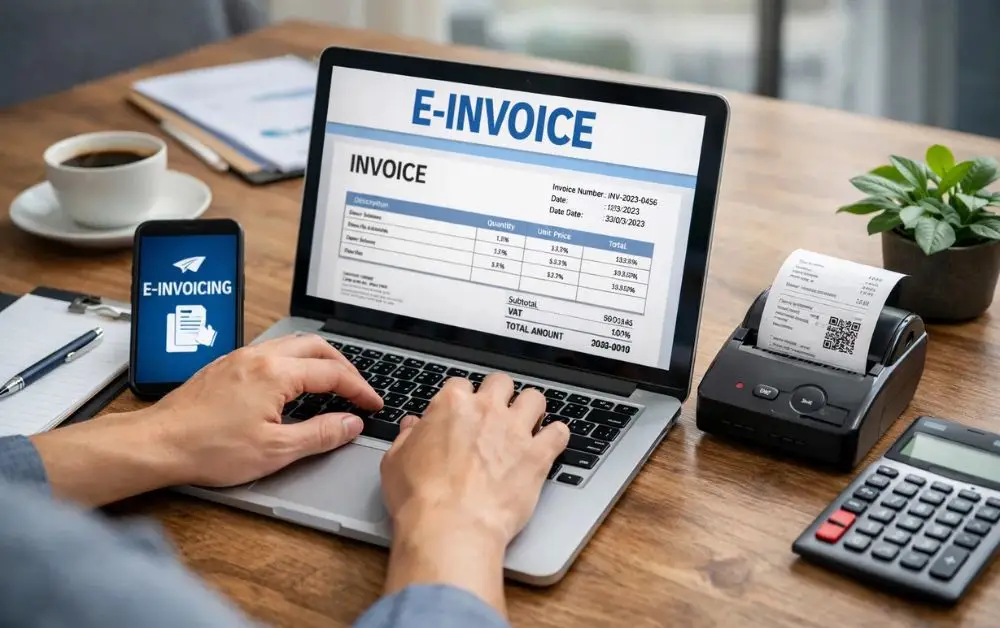
Since the adoption of e-invoicing in the UAE is integrated into the regulatory environment of companies operating in various fields, it is crucial to prepare and conceptualize the new guidelines in time. Since organized digital forms for implementation timelines and the obligatoriness of ASP participation, all elements of the new system are created to simplify tax compliance and update financial reporting. Having trusted partners such as LODITECH to offer Tally and compliance services, companies will be able to easily go through this digital change and take a more efficient and transparent future.
